- May 28, 2026
- 5 min read
What work experience do you need for an MBA?


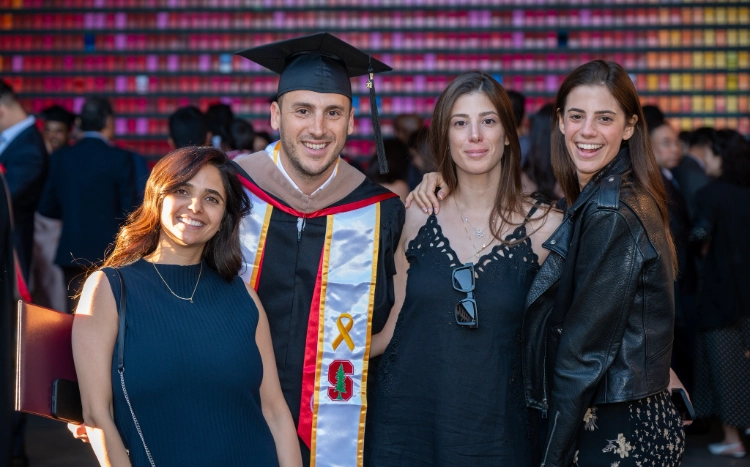
The average MBA work experience for the FT's top 20 business schools is 5.3 years ©Getty Images
TL;DR
- Work experience is a key entry requirement for an MBA program, with students at top business schools averaging between four and six years of experience
- The average work experience across M7 MBA programs is five years
- Some MBA programs don’t have a minimum requirement for work experience, so may consider students with less than two years if other areas of their application are strong
If you’re looking to enroll in an MBA, work experience is a key MBA entry requirement.
Many schools have a minimum work experience they require for successful applicants and won’t even consider your application if you don’t have enough years under your belt. Even if you have the minimum amount of experience for a top program, you may still miss out on a place as admissions teams often value more experienced candidates.
Figuring out just how much work experience you need before you apply to an MBA is a key part of your MBA application process.
Average MBA work experience for top programs
Across the Financial Times’ 10 highest-ranking MBA programs in 2026, the average MBA work experience of each cohort is between four and six years.
At MIT Sloan School of Management (the world’s top MBA in 2026) the cohort has an average of five years of work experience. Similarly, second placed INSEAD recommends between three and eight years of work experience before applying to its MBA, though the average across the cohort is six years.
HEC Paris, Cambridge Judge Business School, ESADE Business School, and Nanyang Business School also have more experienced cohorts with a higher average number of years of work experience. Most members of their respective cohorts have six years of experience.
Some schools also require or strongly encourage applicants to have a minimum of two years of work experience before they apply, and typically won’t accept applications below this amount. Among the Financial Times' top 10, this includes ESADE Business School, HEC Paris, and CEIBS.
It’s a similar story further down the Financial Times 2026 ranking. The average MBA work experience across the top 20 programs worldwide is also around 5.3 years.
Shelly Heinrich, former associate dean of MBA admissions at Georgetown University McDonough School of Business, believes there are two reasons for schools’ preference for more experienced applicants.
“Firstly, so much of the MBA curriculum relies on the context of industry or professional experience,” she says. “Students are also able to better understand the concepts if they have some experience to relate to.
“Secondly, MBA employers typically hire students with prior work experience, and those with between three and six years are usually the most competitive,” she adds.
Average work experience for M7 MBA programs
At Stanford Graduate School of Business, statistically the world’s hardest MBA to get into, the average work experience among the class of 2027 is 5.3 years—the highest of the M7 business schools.
The University of Pennsylvania’s Wharton School has an average of five years, as does Columbia Business School, MIT Sloan School of Management, and Chicago Booth School of Business.
Northwestern Kellogg School of Management has a slightly higher average of 5.1 years of experience, while Harvard Business School’s average is slightly lower at 4.9
Applying for an MBA without work experience
While most schools will simply recommend you have a minimum amount of experience before applying, some will refuse applications that don’t meet the required number of years. So, is it possible to apply for an MBA with below average experience? Or even none at all?
Technically, you could apply to programs that don’t have a hard rule on minimum MBA work experience in their application requirements. Schools including the likes of NYU Stern, University of Washington Foster School of Business, and Yale School of Management all have no specific experience requirement.
MBA admissions teams will also look at your application holistically, considering all the various elements including your GMAT score, GPA, and your performance in the interview process. This means there's a chance you could be accepted without experience.
Another option—though one that ultimately will require you to gain some experience—is a deferred MBA program. These allow college seniors or masters students to apply before they graduate and have any professional experience. Schools accept applicants on the condition that they complete work experience before they enter the course.
The Harvard 2+2 program is an example of such a scheme, requiring successful applicants to spend two years working full-time before they join the two-year MBA program.
If you’re applying to a top school, you should acquire the necessary experience first to give yourself the best possible chance of success, thinks David White, MBA admissions consultant and founding partner of Menlo Coaching.
“MBA programs prefer to admit candidates with four or five years of pre-MBA work experience because those students are likely to have a few leadership experiences, which prepares them well for further leadership development,” he says.
So if you’re considering applying to a top MBA program, before you start thinking about application rounds, essay questions, and everything else included in an MBA application, securing work experience should be your first step.

Matt Kefford is Deputy Editor for GMAC.com, responsible for writing, editing, and producing multimedia content as well as driving content strategy for the website. A business education journalist for 5+ years, he regularly features as a judge on education industry awards and speaks at industry events.
Previously, Matt has written and produced content for national news organizations including The Sunday Times, i News, and Sky News, as well as a number of regional titles. Matt has a B.A. in History from the University of Leeds and an M.A. in Journalism from the University of Sheffield. He is also a gold standard accredited journalist with the National Council for the Training of Journalists.