- June 28, 2026
- 5 min read
What are Germany’s visa requirements for international students?


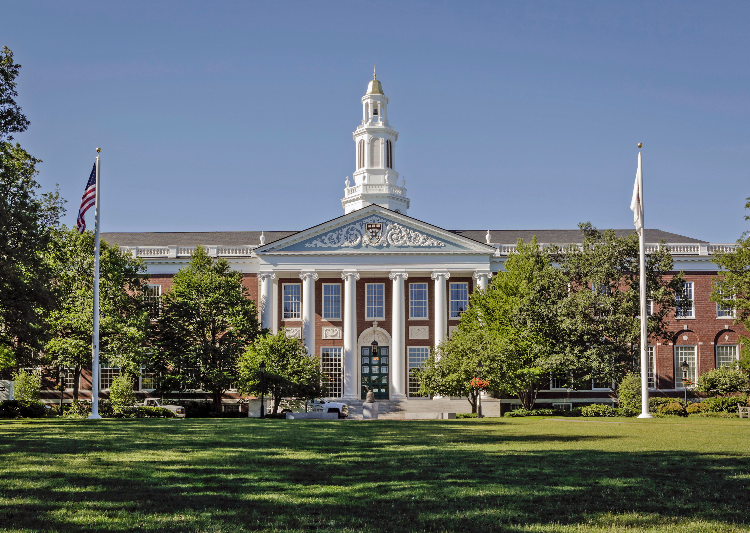
Mannheim, Germany, is home to one of four German business schools ranked among the Financial Times top MBA programs ©taranchic / iStock
With the largest economy in Europe and its position at the heart of the continent, Germany is a formidable place to launch a career in business.
For many, this starts at one of the country’s leading business schools, which range from Mannheim Business School in the southwest to ESMT Berlin, at the heart of the German capital’s thriving tech scene. In fact, four German business schools make it into the Financial Times 2026 Global MBA Ranking.
To secure a place at a German university, most non-EU nationals are required to acquire a visa for study in Germany. So, how difficult is it to apply?
Here we break down everything you need to know about Germany’s student visa process, from required documentation to processing time and language requirements.
Summary of the Germany student visa process
Non-EU based applicants will typically need to apply for a student visa, requiring various documentation including a valid passport, passport-style photos, proof of financial means, and a letter of acceptance from their chosen business school. You usually apply online but will need to schedule an appointment with the German embassy or consulate to have your fingerprints recorded. Visa processing times vary by country and season; while some applications are decided in a few weeks, others can take longer, so it is advisable to apply well in advance of your program start date. You must show proof of German or English language proficiency, if it is required for your course, and at the level specified by your university.
What documents are required for a student visa in Germany?
To kick off the German student visa application process, you need to gather certain documentation.
For one, a valid passport that has been issued within the last 10 years and is valid for at least three months beyond your intended stay in Germany. Your passport will need to have at least two blank pages for your visa. Alongside this, you’ll need to submit two identical passport-style photos, as well as a photocopy of your passport’s data page.
Also essential is a letter of acceptance from your university of choice, which you should have received on confirmation of your place of study. You are also expected to provide previous academic records or transcripts—degree certificates, high school diplomas, and so on—and a CV/resume.
Alongside this, you need to provide a letter of motivation, outlining your desire to study in Germany, and your intentions after you finish your degree. This is likely something you will have had to do as part of your business school application and may cover similar themes.
Proof of financial means is another requirement for your student visa application for Germany. This means demonstrating you have the funds to cover the duration of your stay (both studies and living costs). This amounts to a minimum of 11,904 euros (around US$13,600). Alternatively, you must show proof of financial bursaries or scholarships that demonstrate your ability to cover your costs.
You also need proof of travel health insurance for your initial stay. Within three months of arriving you can sign up for long-term health insurance.
What is the step-by-step process to apply for a student visa in Germany?
After compiling your required documentation, you can start your Germany student visa application process.
You’ll need to create an account on the Consular Service Portal (or Auslandsportal), through which you will complete your visa application form and submit certain documents electronically. You will also be able to book an in-person appointment at a visa administration center (often an embassy or consulate), where you’ll be required to present physical copies of these documents and submit your biometric data (fingerprints and photograph).
At this appointment, you’ll need to pay your visa application fee, which is 75 euros (approximately US86).
What is the average processing time for a German student visa application?
Once submitted, you must wait to hear the outcome of your application. Germany’s student visa waiting times can vary, and many applications take several weeks, depending on the country and time of year. If you have previously lived in Germany, this may take longer, given that you’ll be subject to a more thorough review of your immigration history.
It’s worth noting that you can apply for your visa up to three months before your program’s start date. For the risk averse, it’s worth applying as far in advance as possible.
What are the language requirements for a Germany student visa?
In general, there is a minimum expected German speaking requirement for all applicants to German language programs. That said, most German business school programs are English speaking by default, given the wider international community they are looking to attract. For these programs, a minimum standard of English language proficiency is required, usually at the level and in the test format specified by your university and accepted by the local German mission.
A gateway to Europe—and a business career
For those looking to forge a business career on the continent, Germany can be an ideal place to start—given that, economically, politically, and culturally the country sits at the very center of Europe.
Germany is also unique in its range of metropolitan hubs and distribution of activity—with numerous cities housing populations of more than 500,000 and a wide range of thriving industries.
Applying to business school and securing your German student visa could be the start of an exciting new career journey across Europe.