- June 23, 2026
- 8 min read
What are the requirements for a student visa for the United States in 2026?


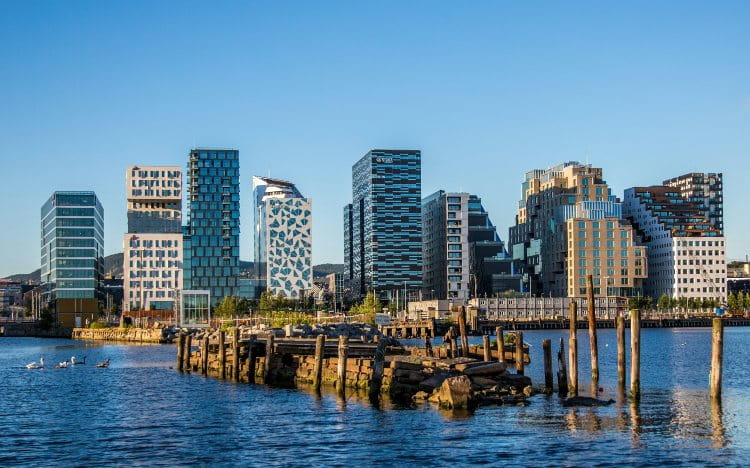
Skyline view over Manhattan Bridge, New York, United States. Photo by Luca Bravo on Unsplash (https://unsplash.com/@lucabravo)
TL;DR
- International applicants for US business school will need to secure an F-1 visa.
- At your in-person interview, you’ll be required to present your passport, DS-160 confirmation page, Form I-20, and potentially proof of qualifications and financial means. Before your interview, you must also pay the SEVIS I-901 fee of $350. The visa application itself costs $185, bringing the minimum upfront total to $535, plus any nationality-based issuance fees.
- To stay on and work after graduating, you’ll need to explore options such as OPT or the H-1B visa.
Out of the world’s top 20 MBA programs, according to the Financial Times rankings in 2026, half (10) are found in the United States. MIT Sloan tops the list, followed by The Wharton School, one of the world’s oldest and most competitive business schools. UC Berkeley Haas, Harvard Business School, and Kellogg School of Management also rank highly.
International applicants need little convincing about their post-graduation prospects in the United States. Whether you’re bound for New York’s thriving financial sector, or California’s dynamic tech scene, there are great career growth opportunities in the country. Securing a place at a top US business school is a promising step toward them.
International applicants to study in the States require a US student visa. With a number of different visas on offer, each with their own application processes, applicants need all available information at their disposal. Here, we’ll break down the different key visas, required documents, costs, and work eligibility.
What are the different US student visas?
When it comes to US student visas, there are three key types.
The F-1 visa is for international applicants to study an academic degree at a US university or business school. This is the relevant visa for MBA and master’s students.
The M-1 visa is an international student visa for applicants to vocational, practical, or technical courses for job-specific skills—such as mechanics or chefs.
The J-1 is a short-term nonimmigrant visa for international students approved to participate in an exchange program in the United States.
What documents are needed for an F-1 student visa?
Since the F-1 visa is most applicable for international business school applicants, we’ll focus on the F-1 visa application. We’ll start with documentation that you’ll need to bring to a physical interview at a local US embassy or consulate.
Applicants must provide a passport valid for travel to the United States. This must be valid for at least six months beyond your period of stay for your study program. It’s worth checking the list of countries that are currently experiencing travel restrictions to the United States.
Before interviewing, you must complete the online Nonimmigrant Visa Application form (DS-160), and you’ll be required to present a physical copy of the form confirmation page. As part of this application, you need to upload a passport-style photo of yourself—and if the upload fails, bring a printed version of it to your interview.
You’ll be required to present a Certificate of Eligibility for Nonimmigrant Student Status (Form I-20). This is essentially confirmation from your school that you’ve been accepted into its degree program.
Other required documentation may include:
- Proof of academic ability—qualifications, diplomas, transcripts, GMAT scores
- Intent to depart the United States following your course completion
- Proof of financial means—for tuition, living, and travel costs
How much does an F-1 US visa application cost?
Applicants for an F-1 visa will have to pay a non-refundable application fee. This is currently $185.
Once your visa is approved, you may need to pay an issuance fee on top, although this varies for different countries.
Before attending your visa interview, you’ll also need to pay the SEVIS I-901 fee. SEVIS—the Student and Exchange Visitor Information System—is the database used by the US government to track international students throughout their studies. As an accepted student at a SEVP-approved school, you’ll be registered in SEVIS and you must pay the associated fee before attending your visa interview.
The current SEVIS I-901 fee for F-1 students is $350, paid online at fmjfee.com. Payment must be made at least three business days before your interview, and the fee is non-refundable regardless of the outcome of your application. Combined with the $185 visa application fee, the minimum upfront cost of your F-1 visa application is $535—before any nationality-based issuance fees.
How long does it take to process a US student visa application?
After your interview is complete and your application is approved, it’s estimated that you’ll wait between five and seven working days for issuance of your visa. Processing times for a US student visa can vary, and recent changes may mean this could take longer.
Unsuccessful applications can take longer to process—particularly if they need additional information or documentation. For that reason, it’s worth leaving as much time as possible before your intended travel date and program start date—around three months, to ensure you receive your visa in good time.
Can I work while studying on a US student visa?
International applicants may look to work alongside their studies, but you should be aware of employment restrictions for US student visa holders.
Broadly speaking, during your first year of studies, F-1 visa holders cannot work “off-campus”, and can only accept certain types of on-campus employment. Any off-campus employment undertaken by US student visa holders must be directly related to their degree program. This will need to be authorized in advance by the university.
In certain cases, such as severe economic hardship or special student relief, F-1 visa holders can take off-campus work. Find out more on the USCIS website.
Will I be eligible to work in the United States after my MBA or master’s?
Studying in the US will often lead to an opportunity to secure a job after you graduate. For MBA and master’s students, there are a few routes to being eligible for work.
Optional Practical Training (OPT) allows international students a period of 12 months to stay on and work in the United States. If your MBA program carries a STEM designation—common in programs focused on business analytics, quantitative finance, or management science—you may be eligible to apply for a 24-month STEM OPT extension, allowing you to stay on and work for a total of three years. To qualify, your employer must also be enrolled in E-Verify. Not all MBA programs carry a STEM designation, so it is worth confirming this with your school before factoring it into your plans.
Applying for OPT is a two-stage process. First, you must request a recommendation from your Designated School Official (DSO), who will endorse your Form I-20 and update your SEVIS record. You can then file Form I-765, Application for Employment Authorization, with USCIS—up to 90 days before your program end date. You cannot begin OPT work until USCIS approves your application and issues your Employment Authorization Document (EAD), so applying early is strongly advised.
If you are eligible for the 24-month STEM OPT extension, you must apply up to 90 days before your current OPT authorization expires, and within 60 days of your DSO entering the recommendation into SEVIS.
To stay on further, you’ll need to apply for a visa, such as the H-1B visa. This is a working visa for highly skilled migrants, and one of the more popular routes to post-MBA employment. To apply for an H-1B visa, you need to have employer sponsorship.
It’s worth noting that this is a highly competitive process—only 65,000 H-1B visas are issued every year, with an additional 20,000 reserved for those with a US master’s degree or higher. The selection process runs in two stages: first, a general lottery is held across all eligible applicants; then, a separate master’s cap lottery is held for those with a qualifying advanced degree who were not selected in the first round. This means MBA and master’s graduates effectively have two shots at selection—an advantage over candidates with only a bachelor’s degree.
There are other visas available. The O-1 visa is for individuals with extraordinary ability or talent, although this is highly competitive and capped in number. The L-1 visa may be more promising, if you’ve spent at least one year working at a company with a US office—crucially, this isn’t capped in number.
To stay in the US long term, you’ll need to get a Green Card, which gives you formal US citizenship. You can be eligible through employment—find out more about that here.
US student visas—competitive, but worth it?
Over a million international students head to the United States to study each year. Securing a place at a top US university is highly competitive—schools such as The Wharton School, Harvard Business School, and Stanford GSB have single-digit acceptance rates for their MBA programs—while applying for a student visa can be time-consuming.
What is clear to anyone who has been through a US university is that it’s worth it. The United States remains one of the strongest job markets, home to a large number of the world’s biggest companies and most exciting industries. For MBA and master’s graduates, it’s an unrivalled opportunity.
What’s the latest US student visa news?
If you’re applying to a US university in 2026, it’s worth understanding that US visa rules have been in flux.
One change is around in-person interviews. Having granted waivers since COVID, the US government reinstated in-person interviews in September 2025. This applies to student visas (F-1) and work visas (H-1B, O-1, etc.). Interviews will also now include detailed background checks that may require applicants to provide access to online social media profiles.
All this is likely to impact waiting times both for applications and renewals. Our US visa warning for international students? Leave as much time as possible by applying early, to avoid disappointment or last-minute panic. It’s also important to prepare yourself as best as possible, to give yourself the best shot at success when you first apply.