- June 11, 2026
- 6 min read
What are the visa requirements for MBA and Master’s students?

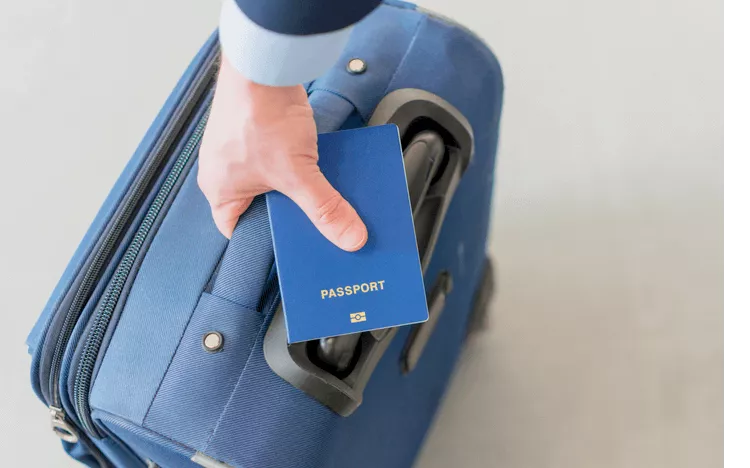
F-1 Visa Requirements | The F-1 visa is your ticket to MBA and master’s programs in the United States ©alexytrener via iStock
TL;DR
- Recently introduced restrictions on foreign student visas have made applying for a visa to study in the United States more challenging than before
- The cost of applying for an F-1 US student visa currently stands at US$785 for countries outside of the Visa Waiver Program and US$535 for countries within
- Despite the extra effort, many prospective students will still consider the value of an MBA from the United States to be more than worth it
The rules around the F-1 student visa for international students in the United States have changed considerably since 2025. However, it’s still possible to apply (and be accepted for) a visa enabling you to study in the country, home to schools such as Harvard, Stanford, MIT, and Wharton.
Read on to understand the latest changes, who can apply, and how much it costs.
F-1 visa requirements for MBA and master’s students
Who qualifies for an F-1 visa?
An F-1 visa allows the recipient to study a full academic program at certain types of US institutions, including colleges. You must be a full-time student during this time.
An F-1 visa only applies to the student in question. Spouses and children, for example, will be required to apply for the F-2 visa. While the F-2 won’t allow your spouse to work, children will be permitted to attend school in the United States while you study.
How do you apply for an F-1 visa?
Before you can apply for an F-1 visa, you must have been accepted by an institution approved by the Student and Exchange Visitor Program.
You will then be registered on the Student and Exchange Visitor Information System (SEVIS) and must pay the SEVIS I-901 registration fee. You will receive a document called a Form I-20 from the school.
At this point, you can complete your visa application online. The next step is an interview at your country’s US embassy or consulate. Note that you will be required to present a printout of your online application and your Form I-20, as well as other documentation including:
- Letter of admission from your business school
- Financial support documents. Proof that you can pay for your program in the form of bank statements, award letters, or loan approval letters
- Passport valid for a minimum of six months into the future at the time of entry
- DS-160 ‘Nonimmigrant Visa Application’ form
- Two photos
- Receipt for payment of the Machine-Readable Visa fee
- Receipt for payment of the SEVIS fee
- Receipt for payment of the Visa Integrity Fee (VIF), if applicable
You may be asked to prove your eligibility for the F-1 student visa by providing academic transcripts, diplomas, degrees, or certificates, or test scores such as for the TOEFL, SAT, or GMAT exam.
You may also be asked for proof of your intent to leave the United States after your program is complete.
How much does the F-1 visa cost?
The SEVIS I-901 fee is currently US$350 and the Nonimmigrant Visa Application costs US$185.
A new Visa Integrity Fee (VIF) applies to countries outside of the Visa Waiver Program (VWP). The VIF costs US$250, taking the total application cost to US$785 for countries outside of the VWP and US$535 for countries inside.
Applicants from certain countries may also have to pay a visa issuance fee after their application is approved, but the amounts vary: these fees are imposed reciprocally if a foreign government imposes fees on US citizens for certain types of visas. Check with your local embassy for further details.
Can I stay in the US after I graduate?
After graduation an F-1 visa allows you to participate in Optional Practical Training, whereby you may work in the United States for a total of 12 months after your course finishes.
For MBA and master’s students who have graduated from STEM-designated programs, this period can be extended to 36 months. Afterwards you would need to apply for an H-1B work visa to remain in the US.
Check out our list of the top STEM MBA programs in the United States, and how much they cost.
What happens if my visa is rejected?
You will be notified of the reasons why, and in some cases you can appeal against the decision.
Alternatively, you can reapply for an F-1 visa once your circumstances change—you won’t have to pay the SEVIS registration fee again, but you will be required to pay another application fee.
F-1 visa application tips
1. Wait times for interview appointments at US consulates vary country to country, with some countries currently reporting wait times of 6–12 months for appointments, so apply for your visa as soon as you have a confirmed place at business school.
2. Research the US embassy/consulate in your home country for information on any additional F-1 visa application requirements and procedures, and for information on issuance fees.
3. You can generally apply for your F-1 visa several months before your program starts (check your local embassy’s rules), but you cannot enter the United States more than 30 days before the start date on your I-20.
4. US Immigration and Customs Enforcement (ICE) advises that you pay your SEVIS fee promptly in order to have it processed before the embassy decides whether or not to grant your visa.
5. Also, according to ICE, the quickest way to pay your SEVIS fee is to file your Form I-901 online, pay by credit or debit card, and print a receipt. Allow three working days for the information to be posted to SEVIS and the Department of State consular information system.
6. If English is not your first language, try to practice before your interview and look up any vocabulary you might need to answer the interviewer’s questions.
You will be asked about your qualifications and plans for your studies, but the interviewer will also likely want to know your post-study plans. They will want convincing reasons why you will return to your home country rather than trying to stay in the United States. Reasons you might share could include family and professional ties, business ownership, property ownership, etc.
Before you apply: America’s visa uncertainty
Before you apply for your F-1 visa, be mindful that visa rules have been changed in the last 12 months.
These recent changes include expanded social media vetting of international students, the likely introduction of a fixed-admission period for international students of four years or less, and a proposed 15 percent cap on international students at any single university.
The measures have led to a greater number of visa rejections and a subsequent drop in international enrollments of 17 percent in 2025.
Although business schools in the United States remain very much open for applicants, it’s certainly worth making sure you navigate the process carefully and allow yourself as much time as possible to apply for your visa.
The United States is home to the majority of the world’s top-ranked business schools and, once accepted into a US MBA or master’s program, you can still expect a strong return on your investment but it pays to be fully up-to-speed on the latest developments for candidates from your country by keeping an eye on official information.
Are you ready to turn your study abroad plans into reality? From securing your visa to arranging accommodation and managing your finances, preparation is key. Read our guide on How to get ready to study abroad for a step-by-step checklist to help you make a smooth transition.