- October 05, 2023
- 5 min read
Why An MBA Is Essential For A Digitally Transformed Business World

Sponsored by Lancaster University Management School

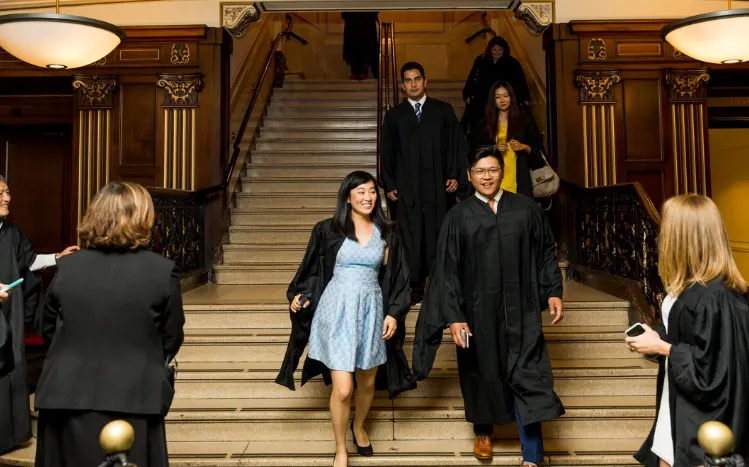
Further study can boost your understanding of digital transformation ©Lancaster / Facebook
Investing in digital transformation is no longer an option for businesses, it’s a necessity. According to Deloitte, successful digital transformation strategies could offer a US$1.25 trillion boost to global Fortune 500 companies, an advantage that can’t be ignored.
However, digital transformation doesn’t just mean embracing new tech such as AI or blockchain. Successful business transformation requires the right mindset as well as an in-depth knowledge of technology—and that’s where employees with the right skill sets can be a great advantage.
The MBA at Lancaster University Management School ensures that its students have what it takes to successfully implement digital transformation in their future careers. The curriculum includes deep dives into business innovation and opportunities to experience technological innovation first-hand, preparing students to implement transformation in their future careers.
Lancaster MBA graduate Demilade Adenuga (pictured below) looked to an MBA to switch up her career path, and is now at the forefront of change in her consultancy role.
After spending four years as a senior auditor at EY, she wanted to experience something different, and knew the broad curriculum on an MBA program could guide her towards a new career. Now, she’s a management consultant at Accenture, specializing in digital finance transformation.
BusinessBecause spoke to Demilade about how her MBA prepared her to work in digital transformation and the skills she gained that help in her role today.
Understanding the complexities of business

Unlike a business master’s degree, an MBA program offers a broad curriculum, which is an advantage when students are thinking about digital transformation.
“An MBA is helpful because it opens your mind to understand the complexities of a business and how every function and decision is important and has an impact,” explains Demilade.
Like many other MBA programs, the Lancaster MBA curriculum covers all aspects of business including marketing, strategy, organizational behavior, finance, and ethics. Each module is guided by thinking about transformation, and putting those skills into practice.
As well as practical group work within each module, there are four ‘Challenge Modules’ on the curriculum, placing students in the same room as real businesses. These modules encompass different aspects of business thinking: the Business Management Challenge, the Entrepreneurial Challenge, the Consultancy Challenge, and the Corporate Challenge.
In the Consultancy Challenge, Demilade had the opportunity to work directly with companies to address post-Covid challenges. Consequently, she learned to think about transformation not just in a vacuum, but as a solution to significant business challenges.
“In my search for a school, I looked for where I could explore, learn, and apply the gained knowledge,” adds Demilade. “Lancaster Management School, which is known for its experiential learning, provided what I needed.”
Seeing real-life innovation on an MBA
As well as the four Challenge Modules, the Lancaster MBA provides additional opportunities for students to apply their digital skills and see real-life innovation.
The Digital Innovation in Business module gives students a deep-dive into digital transformation at companies, exploring exactly how new technologies have changed the business world over time. As part of this module, Demilade and her peers visited Bletchley Park, the home of England’s World War II codebreakers.
As part of the trip, students came face-to-face with the computers that enabled the Allies to break the German Enigma code. Getting up-close with innovation and exploring the combination of place, talent, and technology helped Demilade think differently about innovation.
“Digital transformation is a continuous process,” she asserts. “It leads to successful outcomes only when the digital core of a business is strong with the right talent, strategy, and environment.”
Landing a graduate role in transformation
During her MBA, Demilade attended frequent networking events outside of the consultancy challenges which brought students and businesses together. These events with alumni enabled her to practice her networking skills and put her in a strong position to apply for jobs at the end of her program.
Consequently, shortly after finishing the program, Demilade landed her job as a management consultant with Accenture, focusing specifically at digital finance transformation.
“The role was the change in career path I was looking for, where my previous experience is relevant, and I could explore broad domains like technology,” she explains.
As you would expect, digital transformation is a crucial element to Demilade’s role. Her experiences working alongside real companies on transformation, and exploring how technology can make a difference to companies, enables her to think more strategically in her role.
“My role involves targeting transformation challenges or changes faced by the C-suite, especially the CFO in an organization—to help CFOs or finance executives navigate through digital disruptions to deliver value for the business,” says Demilade.
“Being part of the process of design to implementation and knowing that value is created for a wider population of end users or customers excites me,” she concludes.