- September 09, 2026
- 5 min read
What are some unique ways to fund your MBA?


MBAs are expensive, but business schools are working to make themselves more affordable ©Andrzej Rostek/iStock
TL;DR
- MBA programs are expensive, but schools increasingly offer options that make study more accessible
- Scholarships are one of the core funding sources, but loans, sponsorships, and loan-forgiveness programs can help to lower entry barriers for prospective students
- To give yourself the best chance of funding your MBA, begin planning early, explore all funding routes, and choose the combination that best fits your goals and financial situation
How will you fund your MBA?
Studying at business school is a major investment. The most expensive MBA programs can cost more than US$150,000 in tuition fees alone. But there’s good news. Business schools are constantly working to make studying more affordable, with various innovative payment methods on offer.
So, financing your MBA degree doesn’t have to be so difficult. Here are five ways to fund your MBA.
1. Merit and need-based scholarships
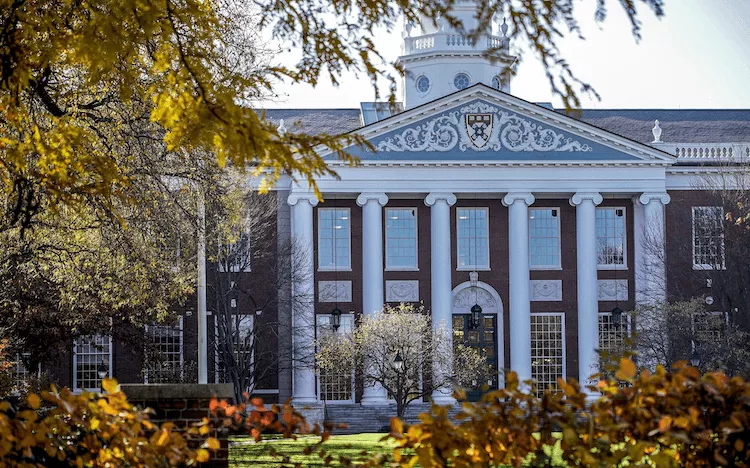
There are hundreds of scholarships available for the world’s MBA programs. Demand for talent has seen business schools implement large scholarship schemes to attract the best applicants. Some business schools, such as Harvard, have significant amounts of funding available to attract the best talent—around 50 percent of the school’s MBA class receives some form of need-based scholarship.
There are also location-specific scholarships such as the Chevening Scholarship, which provides financial support for international candidates to study in the United Kingdom.
Many schools offer need-based scholarships, which are designed to help those facing financial difficulties pursue their business goals. Examples include INSEAD’s Financial Aid Award, London Business School’s Bursary Scholarship, and the Central European University’s Executive MBA Need-Based Scholarship.
Some schools provide tuition waivers instead of direct funding. For example, Esade Business School in Spain offers waivers ranging from 50 to 85 percent of MBA tuition fees.
Merit-based scholarships are also available for highly skilled individuals who show academic excellence. The GMAT™ Talent and Opportunity Scholarship awards US$60,000 a year, providing 10 recipients with financial aid and prep resources, including a voucher for the GMAT exam and practice tests. Other merit-based scholarships include the HEC Paris MBA Scholarship for Excellence and the IMD MBA Merit Scholarship.
Industry-specific scholarships, such as the AICPA scholarships for accounting students and the Imperial College Business School Females in Finance Future Leaders Scholarship, are other options for those with specific career aspirations. Similarly, Cranfield School of Management in the United Kingdom offers a unique scholarship called the Relithan Scholarship. It is worth up to £20,000 (US$27,000) and is awarded to outstanding students who will use their Cranfield experience to pursue an executive role in technology.
These industry-specific scholarships often go beyond financial assistance and can offer further support, including internships and networking opportunities.
2. Loan forgiveness programs
Other business schools have loan forgiveness programs that allow students who work for nonprofit organizations and the public sector after their MBAs to write off loan payments.
Yale School of Management’s Loan Forgiveness Program began in 1986 and was the first of its kind at a business school. The program helps graduates follow their passions for policy, social justice, and community activism by pursuing career opportunities in the public and nonprofit sectors without the burden of student loan payments.
Yale SOM MBA alum Hope Taylor Norman says: “I was able to follow a career dream due to the Yale SOM Loan Forgiveness Program. The program gave us the extra cushion we needed to take the financial risk and follow my dream.”
3. MBA student loans
Beyond scholarships, there are various options available for student loans, depending on your region. In the United States, for example, candidates can apply for Federal loans but with recent changes to the system, GMAC has collaborated with Ascent to help candidates better pay and plan for study.*
For international students (particularly from locations where funding options are limited), Prodigy Finance is an option.
Prodigy Finance was founded by MBA graduates who saw their international classmates struggling to get study loans. With Prodigy Finance, students only need to start paying back loans six months after the course has ended. Importantly, there is no collateral or co-signer required.
Accepted candidates can get a Prodigy Finance student loan at more than 800 business schools globally.
4. Savings and crowdfunding
Personal savings are an often overlooked source of funding.
“Start saving now and planning ahead. Begin thinking about your current budget and if there are ways to cut and save. Every little bit helps in the long run,” says Anna Kerns, associate director of financial aid at the University of North Carolina’s Kenan-Flagler Business School.
Many MBA students are also able to draw on a spouse, family members, and friends to supplement their savings.
While some rely on these networks, others turn to crowdfunding on sites like GoFundMe or Crowdfunder. For two-year MBA programs in particular, earnings from fellowships and internships can also help cover expenses.
5. Company sponsorship
Several companies offer tuition-reimbursement programs. Consulting companies and financial-services companies are typically more likely to offer sponsorship to employees.
“Companies in sectors such as consulting, finance, or industry are often willing to participate in financing their employees’ MBA studies,” says Irina Schneider-Maunoury, the senior associate director of financial aid for degree programs at INSEAD.
Candidates from companies that have not sponsored MBAs in the past will have to work harder to make the case for sponsorship and demonstrate the potential value of the investment.
Your decision to pursue an MBA, and your choice of school and location, may be affected by the funding options available and the return on investment. Taking time to research these fully could make a huge difference to your study costs.
This article was originally published in August 2018 and last updated in September 2026.
*GMAC receives a fee from Ascent Funding, LLC for loan originations arising from this collaboration.




.jpg?rev=81bf88382fa8482a846d5a29cd006a57)