- June 25, 2026
- 5 min read
20 best Master in Finance programs | Financial Times ranking


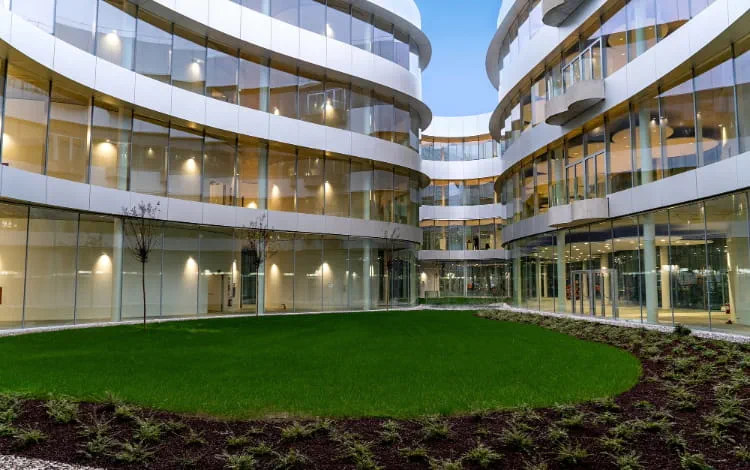
French business schools like ESCP Business School offer the the best Master in Finance programs in the world ©ESCP Business School/Facebook
If you're interested in upping your financial knowledge and pursuing a career in the highly desirable finance sector, a specialist degree could be the ideal study opportunity for you.
Master in Finance degrees teach a combination of key financial theories and relevant practical skills. This recipe proves to be popular—according to the 2026 GMAC Prospective Student Survey, early-career business school applicants have considered the degree as a desirable study option more than any other program over the last decade.
So, how do you choose which school is best to study your Master in Finance? The Financial Master in Finance Ranking lists the 70 best pre-experience Master in Finance degrees (MiF) worldwide, based on a variety of factors including earnings and career outcomes.
Here’s a breakdown of the world's best Master in Finance programs.
Best Masters in Finance | The winners
ESCP Business School continues to lead the FT's Master in Finance ranking, holding first place for the fourth consecutive year. The school first claimed the top spot in 2023, ending an 11-year stint at number one for fellow French business school HEC Paris.
ESCP performs particularly strongly in areas such as careers services, alumni network, and employment outcomes. The school reports that 100% of graduates were employed within three months of graduation, while 98% of alumni surveyed said they had achieved their goals after completing the degree.
Graduate salaries are particularly important to the Master in Finance ranking, holding the highest weighting of 16%. On average, graduates from the ESCP Business School Master in Finance program go on to earn an impressive salary of $183,214 three years after graduating. That's a 55% increase compared with their previous earnings.
The highest average salary however is earned by graduates from China's Shanghai Advanced Institute of Finance at STJU, which ranks sixth overall, at $218,057.
Out of the top 10, five programs are based in France—ESCP, Skema Business School, ESSEC Business School, EDHEC Business School, and HEC Paris—while two hail from China: Tsinghua University, and Shanghai Advanced Institute of Finance.
Despite the strong financial performance of Chinese business schools, European institutions continues to dominate overall. In total, 18 of the top 20 Master in Finance programs are based in Europe, with the remaining two spots held by the Chinese schools.
The top 10 is completed by Nova School of Business and Economics in Portugal, London Business School in the UK, and IE Business School in Spain.
Two schools drop out of the top 20 entirely. Peking University Guanghua School of Management—ranked 10th in 2025—is absent from this year’s ranking, while IESEG School of Management slides to 22nd place down from 15th.
Just seven US programs appear in the rankings, the highest of which is MIT Sloan School of Management, one of the prestigious M7 business schools in 25th place.
Financial Times 2026 Master in Finance Ranking: Top 20
World's best Master in Finance programs | Breakdown
When breaking down the ranking, Chinese business schools continue to deliver strong returns based on the FT’s ranking metrics.
Shanghai Advanced Institute of Finance leads with the highest alumni salary worldwide, with alumni reporting average earnings of $218,057. Tsinghua University places third overall and first for value for money, while graduates earn salaries of $209,000.
ESCP Business School, ranked first, boasts the highest salaries among European schools, with alumni earning an average of $183,214 three years after graduating.
The FT also ranks ESCP first for career progression, followed by Kozminski University in Poland and Fordham Gabelli School of Business in the US.
In terms of the diversity of the Master in Finance cohort, the FT credits business schools for their proportion of women and international students. Audencia is the only school to report 100% international students. Meanwhile, the University of Edinburgh Business School and Nova School of Business and Economics share the highest rate of gender diversity, with women making up 54% of the cohort.
However, out of the 70 schools ranked, only six have achieved or surpassed gender parity.
The Financial Times also credits schools for transparency regarding their carbon emissions and net zero targets. Brandeis University School of Business and Economics ranks first, followed by the University of Texas at Austin, and MIT Sloan in third.
The top business school for value for money is Tsinghua, followed by Shanghai Advanced Institute of Finance, and Toulouse School of Management.
What is the methodology behind the Financial Times MiF ranking?
The FT’s MiF rankings are calculated based on survey responses from alumni who graduated from pre-experience programs three years ago, along with school data. Alumni responses make up 56% of each school's score, with school data constituting the remaining 44%.
Schools are ranked using 19 different categories, broadly covering areas including salary and career progression, diversity, international opportunities, and faculty expertise.
The FT also ranks the best post-experience programs based on graduate respondents from later in their careers. However, the FT has not released this data since 2024.