- February 09, 2026
- 11 min read
What careers can an MBA lead to?


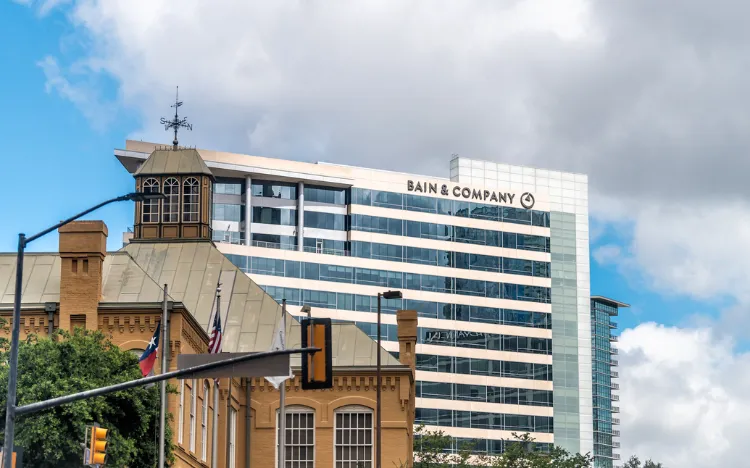
Graduates from MBA programs can often land well-paid roles in the business and corporate world ©Getty Images/Unsplash
TL;DR
- An MBA provides a number of benefits for your career including a salary boost, job promotion, an expanded network, and the ability to switch career
- The most popular industries for MBA graduates are consulting, finance, and tech, which account for around 60-80% of all MBAs
- Graduates of the world’s leading business schools command average salaries of over $175,000. Even at lower-ranked schools, average starting salaries still exceed $100,000
An MBA is one of the most prestigious degrees in the world, capable of taking you to senior positions within global corporations and commanding top-tier salaries.
But that’s not all. Enrolling in an MBA is also an effective way of pivoting to a new industry without sacrificing your salary or taking years to retrain. And the degree’s global recognition means you’ll be well-placed to take on a new role anywhere in the world.
Here we’ll explore the most common MBA careers, jobs, and industries. We’ll examine average salaries, typical job titles, the skills you’ll gain from the degree, and what you need to apply for an MBA.
Let’s start by looking at the skills you’ll learn during an MBA.
What does an MBA teach you?
An MBA is a generalist degree that teaches you the fundamentals of business. It equips you with the skills, knowledge, and network you need to make an impact in businesses of all shapes and sizes.
During an MBA you’ll learn a mixture of hard and soft skills. The hard skills you’ll master include things like accounting, finance, marketing, and business strategy, while the soft skills include communication, leadership, and critical thinking.
Most MBAs will allow you to specialize in certain topics. For instance, most MBAs will offer electives in topics such as sustainability, entrepreneurship, and fintech.
But maybe more than anything, an MBA is recognized and respected by employers all over the world. It’s a mark of honor on your resumé that will grab the attention of any corporate recruiter, anywhere.
What are typical career outcomes for MBA graduates?
Salary increase
The first and most obvious benefit of an MBA is the salary boost it often provides. After all, it is the biggest motivating factor for prospective business school students, according to the GMAC Prospective Students Survey.
And it seems the salary boost is real. According to the 2025 Financial Times Global MBA Ranking, the average salary boost for graduates of the world’s 100 top programs was 122%. That ranged from a decent 48% increase for graduates of the MBA at Frankfurt School of Finance and Management in Germany, to a salary uplift of 249% at Xavier School of Management in India.
In terms of actual salary, an MBA can also help you reach the top tier of earners. According to the same ranking, the average salary of MBA graduates was $166,679. Even at the school with the lowest average salary in the list—Audencia Business School in France—the average graduate salary was still an impressive $93,000 before bonuses.
Career advancement
You shouldn’t only expect a boost to your salary after an MBA, however. It’s also a great way to catapult you to senior-level positions. According to a 2022 GMAC survey, around two-thirds of business school graduates reported that they advanced at least one job level as a result of their degree.
Career switching
An MBA is a quick and effective way to switch career. A global GMAC survey found that 50-60% of MBA graduates managed to switch either industry or job function as a result of their degree.
At some schools, the results are even more impressive. For example, 91% of Cambridge Judge MBA graduates switched either country, function or industry after their MBA. Around one-third of the class managed all three, making a so-called ‘triple jump’.
Expanded network
Many MBA graduates also report an expanded network as a key benefit from their degree - our survey found that 76% expanded their professional network through their MBA. This can help you secure a job, but it can also have a range of other benefits on your personal and professional life.
Global mobility
Because of the global nature of an MBA, many graduates are able to use the degree to find work in a new country. MBA classrooms tend to be extremely diverse: some programs in the FT ranking report an international student ratio of over 90%, with more than 30 countries represented in some cases. This exposure to so many different cultures prepares you well for a career in various global destinations.
What are the most common MBA careers?
Though an MBA can lead into a wide range of careers, three industries are undoubtedly the most popular: consulting, financial services, and tech. Together, the ‘MBA Big Three’ account for around 60-80% of pathways for all MBA graduates.
However, interest in other areas such as healthcare and entrepreneurship has grown in recent years to become viable career paths for MBA graduates.
Let’s explore each career path in detail, including average salaries, typical job titles, and job prospects.
Consulting
In its simplest terms, a consultant gives expert advice to businesses. They may solve complex business challenges, help them improve performance, and support the implementation of company-wide projects.
Consultants can work across a range of different industries or focus on one. There are a few different types of consultant, including management, IT, strategy, and finance. Each one provides specialized support on different business challenges.
How many MBA graduates work in consulting?
Consulting is the career path that’s perhaps most associated with MBA programs. At some business schools the proportion of graduates moving into consulting can exceed 40%. For instance:
55% of the INSEAD MBA Class of 2025 are now working in consulting
45.4% of the Yale MBA Class of 2025
41% of the Emory MBA Class of 2025
However, at other schools the proportion may be closer to 20-25%.
Average MBA consulting salaries
According to our Business Careers Guide, the average base salary for MBA hires at the Big Three consulting firms in 2025 was $190K, rising to around $250K with bonuses.
Even at firms outside the Big Three, you can still expect to earn an average salary of over $100,000 as a consultant in the United States. In other regions this is likely to be a little lower, however.
Finance
Along with consulting, finance has long been considered one of the main MBA industries. A finance role could encompass jobs in sectors such as investment banking, private equity, venture capital, or fintech.
How many MBA graduates work in finance?
Although any MBA program is likely to be a good launchpad into the finance industry, some schools have a higher proportion of finance grads than others. Some of the schools with the strongest reputation for finance include Wharton (38.2% of its MBA graduates moved into finance in 2025), Columbia (35.4% entered finance) and Harvard (33% entered finance).
Average MBA finance salaries
One of the biggest attractions of a career in finance are the salaries. Average salaries exceed $175,000 at the likes of Columbia, MIT Sloan, and Harvard, but are still likely to be above $100,000 outside of the M7 business schools.
In other regions average finance salaries are likely to be lower—but it remains one of the highest-paid MBA industries regardless of which school you attend.
Tech
Though consulting and finance were traditionally the two industries most associated with MBA programs, since the mid 2010s tech has emerged as one of the most popular industries for MBA graduates —and although recruitment has been less consistent in recent years, with the emergence of AI it is an interesting sector to keep an eye on.
MBA graduates have historically moved into roles with job titles such as product manager, data analyst, business operations manager, or strategy manager.
How many MBA graduates work in tech?
Schools such as Stanford, MIT Sloan, and Berkeley Haas have strong reputations for tech, with anywhere between 30-40% of MBA graduates from these schools moving into the industry.
That’s in large part down to the close links these schools have with Silicon Valley. If you’re looking to launch a career in the tech industry after an MBA, it’s worth investigating whether your target school has similar links with the tech sector.
Average MBA tech salaries
Though average MBA tech salaries tend to be slightly lower than consulting or finance, they still top $150,000 at the leading schools. Again, that figure relates to the United States, and they’re likely to vary region-by-region.
Healthcare
One of the most notable trends in the MBA industry in recent years is the emergence of healthcare as a viable career for graduates. In 2018, just 7% of prospective business students were interested in a career in healthcare. By 2023, that figure had grown to 15%.
How many MBA graduates work in healthcare?
Some schools are becoming hotbeds for a career in healthcare. At Emory Goizueta for instance, the proportion of MBA graduates moving into healthcare has risen from 4% in 2023 to 13% of the Class of 2025. At Vanderbilt Owen, 16% of the Class of 2025 are now working in healthcare.
Average MBA healthcare salaries
Healthcare salaries aren’t quite as high as the Big Three, but they’re more than competitive: at Vanderbilt Owen, MBA graduates earned a median salary of $130,000 in healthcare. At Stanford, median healthcare salaries for the Class of 2025 were $175,000.
Entrepreneurship
Another growing area of interest for MBA graduates is entrepreneurship. However, it remains a small proportion of the graduate pool compared to consulting, finance, and tech.
How many MBA graduates go into entrepreneurship?
It’s estimated that around 5% of MBA graduates start their own business in the years immediately following b-school, but it does vary widely depending on where you study. For instance, the proportion of MBA graduates of Washington Olin, Oxford Said and Bath to start a business is over 10%. At Harvard, one of the best MBAs for entrepreneurs in the world, the figure is 17%.
And it’s easy to see why: an MBA provides you with all of the tools you need to launch your own venture, including a knowledge of the business fundamentals, access to business funding networks, and the chance to meet potential co-founders on your program.
Though the proportion of MBA graduate entrepreneurs tends to be quite low, their success rate is extremely high. Research suggests that 14% of all unicorn (billion-dollar companies) founders hold an MBA, with Harvard producing the most (84).
Additionally, school employment reports (and rankings) only gather information on graduates within the months following graduation (or three years for many rankings). Founding a company can come later in an MBA grad's career when their knowledge and confidence has grown.
Other (Energy, CPG, Public Sector)
The other main sectors that MBA graduates normally move into include sustainability, CPG (Consumer Packaged Goods), and the public sector. However, these industries rarely exceed more than 5% of any graduating MBA cohort.
That said, it’s still very possible to pursue career paths like these with an MBA because it is a generalist degree that can be applied to any industry.
The graduates who move into one of these niche industries do tend to command high average salaries, however. For instance, Harvard MBA graduates working in the energy sector command a median salary of $166,000.
What do you need to apply for an MBA?
To apply for an MBA you'll generally need:
- At least three years of work experience, ideally with some managerial experience
- A bachelor’s degree (it doesn’t have to be in a business-related field)
- To take a standardized test such as the GMAT, to demonstrate your readiness for the rigor of a business degree
- Proof of English proficiency (if applicable)
If you meet those requirements, you’ll have to apply for the program directly through the school website. The application process normally involves writing 1-2 essays, obtaining at least 2 written references, and paying an application fee. You are usually required to attend an interview as well.
If you’re thinking of applying for an MBA, explore our school and application articles in more detail, to help you start identifying your target programs.